Top Features to Look for in Industrial Coveralls
A practical Triotex and PPE CART guide to the features industrial buyers should check when selecting coveralls for safety, comfort, durability, and repeat use.
Why Industrial Coveralls Need Careful Selection
Industrial coveralls are used across manufacturing, oil and gas, engineering, mining, utilities, maintenance, warehousing, and many other demanding workplaces. They protect the worker's clothing, support a professional appearance, and can provide important safety features such as flame resistance, high visibility, anti-static performance, or protection from dirt and light workplace exposure.
For many companies, coveralls are also one of the most visible parts of the brand. A well-made coverall gives workers confidence and gives customers a sense that the site is organized and professional. A poorly chosen coverall can create discomfort, early damage, poor fit, and repeated replacement cost.
Triotex looks at coveralls from the manufacturing and customization side. PPE CART looks at them from the buyer's practical safety and procurement side. Together, the right approach is simple: choose a garment that fits the job, protects the worker, survives daily use, and can be supplied consistently.
Fabric Is the First Decision
The fabric affects comfort, durability, protection, washing, and price. Common industrial coverall fabrics include cotton, polyester-cotton blends, cotton-rich twills, FR-treated fabrics, inherent FR blends, denim, and technical blends. The right fabric depends on the work environment.
For general industrial uniforms, a durable poly-cotton or cotton-rich fabric may provide a good balance of comfort and life. For hot climates, breathability and fabric weight become important. For oil and gas or electrical environments, FR properties may be required. For outdoor or roadwork environments, hi-vis panels and reflective tape may be necessary. For heavy-duty workshop use, reinforcement and abrasion resistance may matter more than a lightweight feel.
Buyers should avoid choosing by GSM alone. A heavier fabric is not automatically better, and a lighter fabric is not automatically weaker. Weave, finish, fiber blend, garment construction, and washing performance all matter.
Stitching and Reinforcement
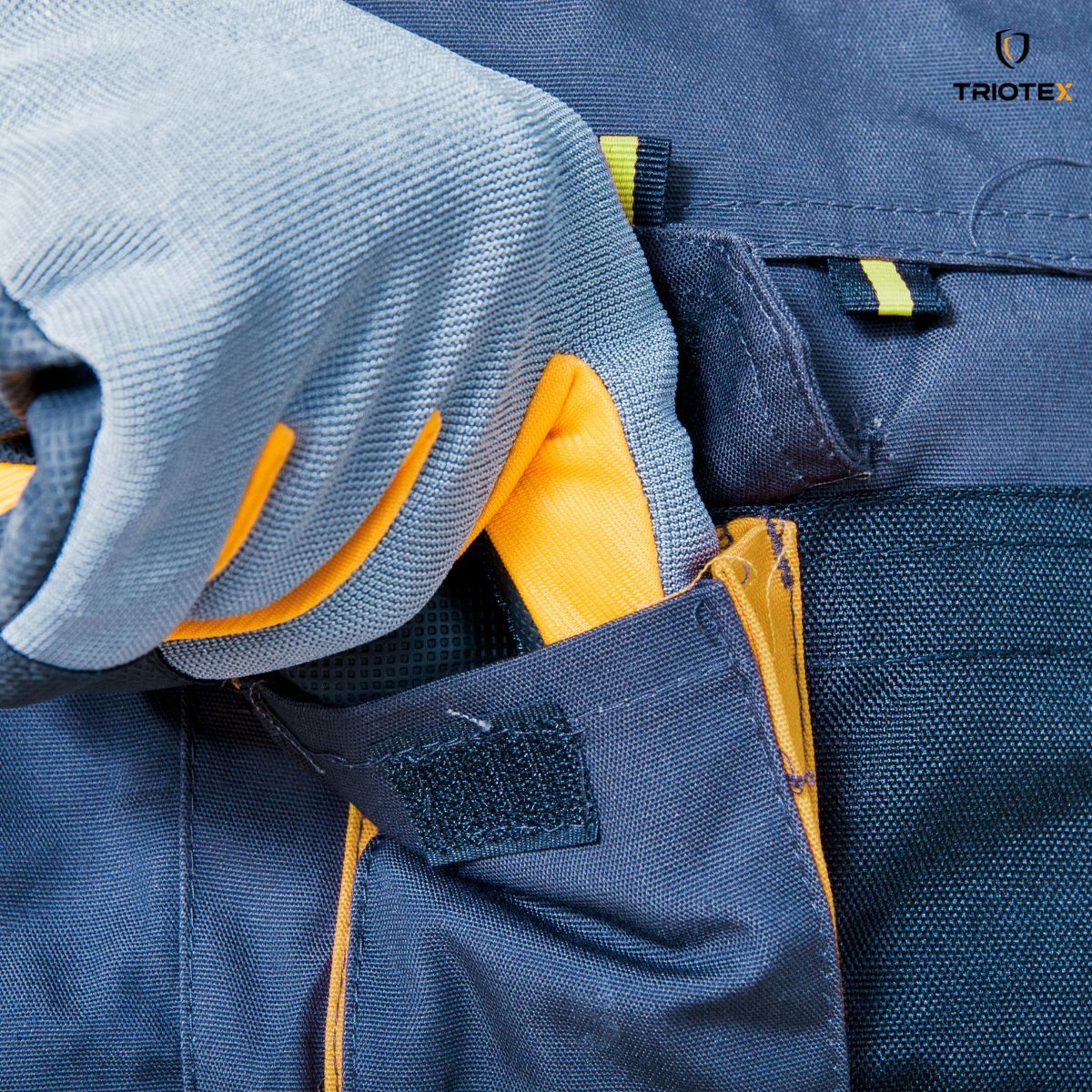
Coveralls are pulled, stretched, washed, and worn for long hours. Weak stitching is one of the fastest ways a garment fails. Buyers should check seam construction, thread quality, bartacks, pocket attachment, zipper setting, crotch seams, sleeve seams, and stress points.
Reinforcement is especially important around pockets, knees, elbows, side openings, and areas where tools or body movement create pressure. For technical garments, the thread and trims should match the garment's safety purpose. For example, FR coveralls should use suitable components so the overall design supports the intended protection level.
Fit and Movement
A coverall has to cover the full body, but it should not feel like a restriction. Workers bend, climb, lift, crawl, drive, and operate machinery. A tight coverall can pull at the shoulders, seat, or knees. An oversized coverall can catch on equipment and look unprofessional. Good patterning helps balance coverage and movement.
Features such as action backs, gussets, elasticated waist panels, adjustable cuffs, and well-shaped sleeves can improve movement. For large teams, size trials are useful before bulk production. PPE CART's buying lens is useful here because it encourages the buyer to think about real users, not just a size chart. Triotex's manufacturing lens helps turn that feedback into a repeatable pattern.
Closures, Pockets, and Daily Usability
Small design details decide whether workers like a coverall. Zippers should be durable and easy to operate. Snaps should be secure. Pockets should be placed where workers can actually use them. Pen pockets, chest pockets, tool pockets, knee pad pockets, radio loops, ID loops, and side access openings may be useful depending on the job.
More pockets are not always better. Too many pockets can add bulk, increase cost, and interfere with safety equipment. The best pocket layout is specific to the worker's daily task. A maintenance technician, warehouse worker, offshore engineer, and factory supervisor may each need a different design.
Safety Features and Compliance
Industrial coveralls may include a range of safety features. FR coveralls are used where flame or flash fire risk exists. Hi-vis coveralls are used where visibility is critical. Anti-static features may be needed in certain industrial environments. Reflective tape may be required for night or low-light visibility. Chemical or rain protection may require different garment types altogether.
Buyers should define the safety requirement before choosing a design. It is risky to start with a generic coverall and later add safety language without test evidence or a clear specification. If compliance is required, ask for the relevant standard, fabric or garment details, and documentation.
Wash Durability and Color Control
A coverall that looks good on day one may not remain suitable after repeated washing. Shrinkage, color fading, seam twisting, reflective tape damage, zipper failure, and fabric pilling can all reduce product life. For industrial laundry, the garment must be designed with that washing process in mind.
Color control is also important for branded programs. A company may expect navy, royal blue, orange, red, grey, or black to remain consistent across repeat orders. Approved lab dips, fabric records, and sample references help maintain consistency.
Branding and White-Label Options
Coveralls are commonly branded with embroidery, heat transfer, woven patches, or printed labels. Branding should be planned early because placement, size, and method can affect cost, lead time, appearance, and comfort. For FR or hi-vis garments, branding must not compromise the garment's protective function.
Triotex can support customized and white-label coverall programs where buyers need specific patterns, labels, packing, cartons, and repeat production. PPE CART helps position coveralls within a broader workwear and PPE range so customers can source related items such as gloves, helmets, goggles, safety shoes, and hi-vis accessories.
Coverall Buying Checklist
- Define the work environment and hazard before choosing fabric.
- Check stitching, bartacks, closures, pockets, and stress points.
- Review fit with real users before confirming bulk sizes.
- Confirm whether FR, hi-vis, anti-static, rain, or winter features are required.
- Test wash performance, shrinkage, and color fastness where possible.
- Plan branding before production rather than treating it as an afterthought.
- Keep approved samples and technical details for repeat orders.
Conclusion
The best industrial coverall is not simply the cheapest garment or the heaviest fabric. It is the coverall that fits the risk, supports the worker, survives daily use, and can be supplied again with the same quality. That requires attention to fabric, fit, construction, safety features, washing, branding, and procurement planning.
Triotex and PPE CART help buyers look at the full decision. Triotex supports the technical manufacturing and customization side, while PPE CART supports practical selection across workwear and PPE categories. For industrial buyers, that combined view leads to better garments and fewer surprises after deployment.